Cancelled Call Meaning Iphone. Cancelled calls are different depending on the platform that you’re using. The primary meaning of “canceled call” in your iphone phone log is that the person calling you didn’t finish the call.
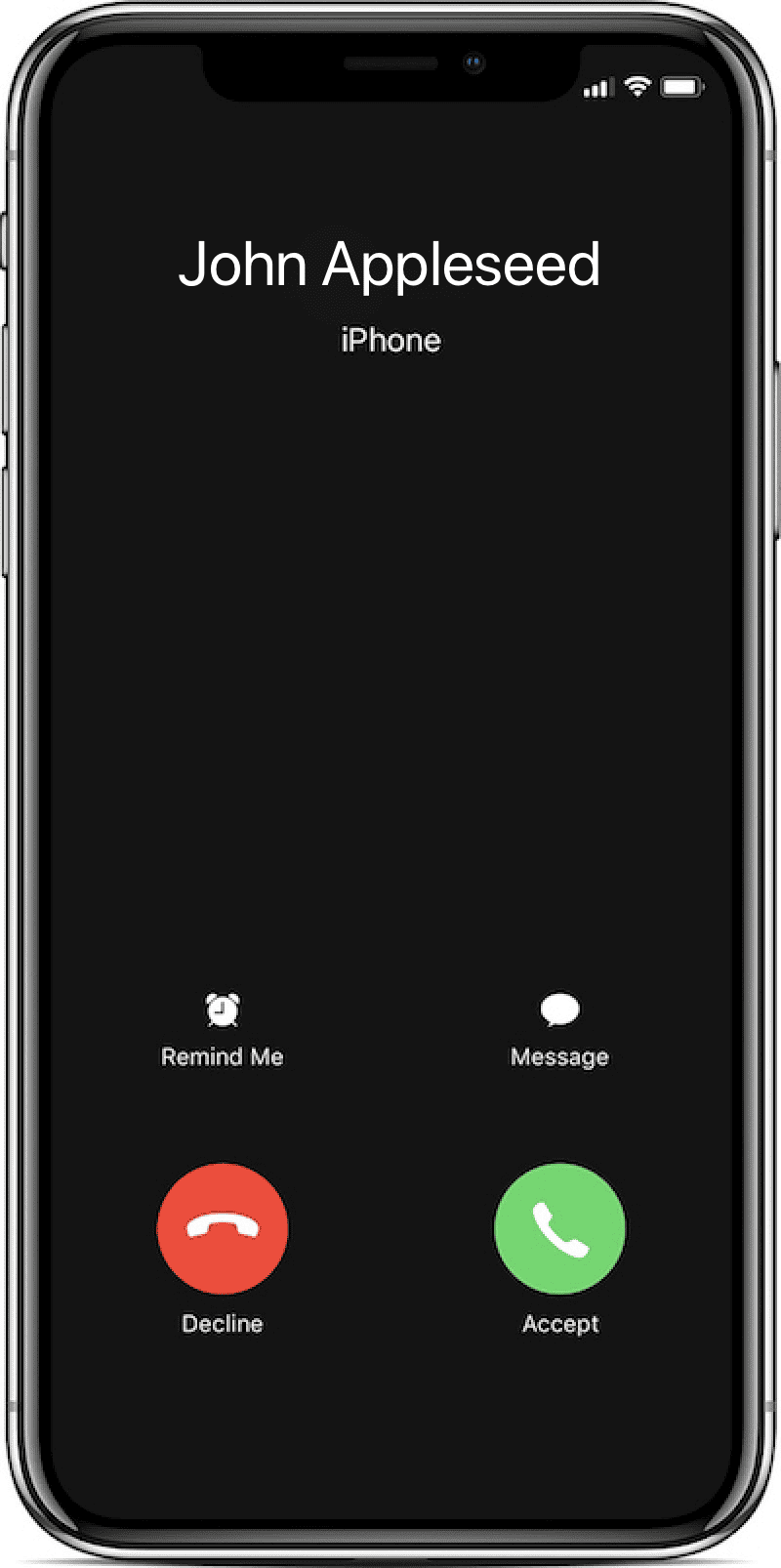
Apple Will Examine Cases of an iPhone X Call Delay Bug The Mac Observer from www.macobserver.com The Problems With True-Conditional theories about Meaning
The relationship between a sign with its purpose is known as"the theory that explains meaning.. It is in this essay that we'll discuss the challenges of truth-conditional theories regarding meaning, Grice's assessment on speaker-meaning and The semantics of Truth proposed by Tarski. The article will also explore theories that contradict Tarski's theory about truth.
Arguments against truth-based theories of significance
Truth-conditional theories for meaning say that meaning is the result of the conditions that determine truth. However, this theory limits its meaning to the phenomenon of language. It is Davidson's main argument that truth-values can't be always the truth. Thus, we must know the difference between truth-values and an claim.
Epistemic Determination Argument Epistemic Determination Argument is a method to support truth-conditional theories of meaning. It relies on two essential principles: the completeness of nonlinguistic facts and understanding of the truth condition. However, Daniel Cohnitz has argued against these assumptions. Therefore, this argument does not have any merit.
Another concern that people have with these theories is the implausibility of the concept of. This issue can be resolved by the method of mentalist analysis. This is where meaning can be examined in ways of an image of the mind rather than the intended meaning. For instance someone could find different meanings to the same word if the same individual uses the same word in the context of two distinct contexts, however, the meanings for those words may be the same when the speaker uses the same word in multiple contexts.
While the most fundamental theories of definition attempt to explain how meaning is constructed in way of mental material, non-mentalist theories are sometimes pursued. This could be because of an aversion to mentalist theories. They also may be pursued for those who hold mental representation should be assessed in terms of linguistic representation.
Another prominent defender of this view Another major defender of this view is Robert Brandom. This philosopher believes that the significance of a phrase is in its social context and that speech actions in relation to a sentence are appropriate in its context in which they are used. So, he's come up with a pragmatics theory to explain the meanings of sentences based on social normative practices and normative statuses.
Grice's analysis of speaker-meaning
Grice's analysis based on speaker-meaning puts major emphasis upon the speaker's intentions and their relation to the significance and meaning. He claims that intention is an in-depth mental state which must be considered in an attempt to interpret the meaning of a sentence. But, this argument violates speaker centrism by analyzing U-meaning without considering M-intentions. Furthermore, Grice fails to account for the reality that M-intentions can be specific to one or two.
Furthermore, Grice's theory does not include important instances of intuitive communication. For example, in the photograph example from earlier, a speaker isn't clear as to whether they were referring to Bob himself or his wife. This is a problem since Andy's photo doesn't reveal the fact that Bob as well as his spouse is unfaithful , or loyal.
While Grice is right that speaker-meaning is more fundamental than sentence-meaning, there is still room for debate. In reality, the distinction is essential to the naturalistic integrity of nonnatural meaning. Indeed, the purpose of Grice's work is to offer naturalistic explanations and explanations for these non-natural significance.
To comprehend the nature of a conversation, we must understand what the speaker is trying to convey, which is complex in its embedding of intentions and beliefs. However, we seldom make intricate inferences about mental states in simple exchanges. Thus, Grice's theory of speaker-meaning does not align with the actual mental processes involved in learning to speak.
While Grice's model of speaker-meaning is a plausible explanation how the system works, it's insufficient. Others, including Bennett, Loar, and Schiffer have proposed more elaborate explanations. However, these explanations are likely to undermine the validity and validity of Gricean theory, because they treat communication as an activity that is rational. Fundamentally, audiences believe that a speaker's words are true because they recognize the speaker's intentions.
It does not consider all forms of speech acts. Grice's analysis fails to include the fact speech acts can be employed to explain the significance of sentences. The result is that the significance of a sentence is reduced to its speaker's meaning.
Issues with Tarski's semantic theory of truth
While Tarski claimed that sentences are truth-bearing but this doesn't mean it is necessary for a sentence to always be truthful. Instead, he tried to define what is "true" in a specific context. His theory has since become a central part of modern logic, and is classified as correspondence or deflationary.
One issue with the theory of truth is that it cannot be applied to natural languages. This is because of Tarski's undefinability thesis, which states that no language that is bivalent is able to have its own truth predicate. Although English might seem to be an the only exception to this rule but this is in no way inconsistent with Tarski's stance that natural languages are closed semantically.
However, Tarski leaves many implicit restrictions on his theory. For example the theory should not include false sentences or instances of form T. That is, theories must not be able to avoid what is known as the Liar paradox. Another problem with Tarski's theory is that it is not conforming to the ideas of traditional philosophers. Furthermore, it cannot explain every single instance of truth in the ordinary sense. This is an issue for any theories of truth.
Another problem is that Tarski's definitions of truth requires the use of notions taken from syntax and set theory. These are not the best choices when looking at infinite languages. Henkin's style of language is well-established, but it does not fit with Tarski's notion of truth.
In Tarski's view, the definition of truth difficult to comprehend because it doesn't reflect the complexity of the truth. For instance, truth cannot serve as a predicate in the interpretation theories and Tarski's axioms cannot explain the semantics of primitives. Further, his definition of truth does not align with the concept of truth in definition theories.
However, these concerns should not hinder Tarski from applying this definition and it doesn't meet the definition of'satisfaction. In reality, the real definition of truth is less straight-forward and is determined by the particularities of object language. If you want to know more, take a look at Thoralf Skolem's 1919 article.
Problems with Grice's analysis of sentence-meaning
Grice's problems with his analysis of sentence meaning can be summed up in two primary points. First, the intentions of the speaker has to be recognized. Second, the speaker's utterance must be supported by evidence that shows the intended outcome. But these conditions are not achieved in every case.
This issue can be resolved by changing the way Grice analyzes meanings of sentences in order to take into account the significance of sentences that do not exhibit intentionality. This analysis also rests upon the idea that sentences are highly complex and comprise a number of basic elements. So, the Gricean analysis does not capture the counterexamples.
This argument is especially problematic when considering Grice's distinction between speaker-meaning and sentence-meaning. This distinction is essential to any naturalistically sound account of sentence-meaning. This theory is also crucial to the notion of implicature in conversation. This theory was developed in 2005. Grice proposed a starting point for a theoretical understanding of the meaning that was refined in subsequent writings. The core concept behind significance in Grice's work is to examine the speaker's motives in determining what the speaker wants to convey.
Another issue in Grice's argument is that it does not include intuitive communication. For instance, in Grice's example, it's unclear what Andy is referring to when he says that Bob is unfaithful towards his spouse. However, there are plenty of alternatives to intuitive communication examples that do not fit into Grice's argument.
The basic premise of Grice's analysis requires that the speaker should intend to create an effect in your audience. However, this assertion isn't scientifically rigorous. Grice defines the cutoff on the basis of variable cognitive capabilities of an person who is the interlocutor as well the nature of communication.
Grice's theory of sentence-meaning does not seem to be very plausible, though it's a plausible version. Different researchers have produced deeper explanations of significance, but these are less plausible. Additionally, Grice views communication as an activity that is rational. Audiences are able to make rational decisions by being aware of the speaker's intentions.
How can you fix cancelled calls on your iphone? No, cancelled in the call log means you have cancelled the call because the person on the other side didn't answer. After a few seconds, you.
Calls From Iphone Are Immediate.
A cancelled call on an iphone simply means that you did not wait for the other party to pick up the phone. No, cancelled in the call log means you have cancelled the call because the person on the other side didn't answer. You can’t tell if the other person ignored.
Cancelled Call On Iphone Simply Means A Call That Went Through But Was Never Answered By The Recipient And Never Went To The Voicemail.
How can you fix cancelled calls on your iphone? When you receive a call from a different number, you might wonder what a cancelled call means. Usually when i get someone's voicemail but hang up without leaving a.
It's Cancelled Because You Hung Up Before They Answered.
Iphone cancelled call means someone did not want to answer. For example, they could answer, you could get their voicemail, or the call could terminate from the. Check your iphone’s signal strength.
Then Why Is It Listed As Canceled Call?
After a few seconds, you. Cancelled calls are different depending on the platform that you’re using. What does cancelled call on iphone mean?
Generally, When You See A Canceled Call On Your Iphone, It Means That The Caller Cancels The Call After Ringing For A Few Seconds.
This video was also made on the basis. When calling someone on your iphone, various circumstances may occur. It only happens with outgoing calls which means the calls you have dialed.
Share
Post a Comment
for "Cancelled Call Meaning Iphone"

Post a Comment for "Cancelled Call Meaning Iphone"