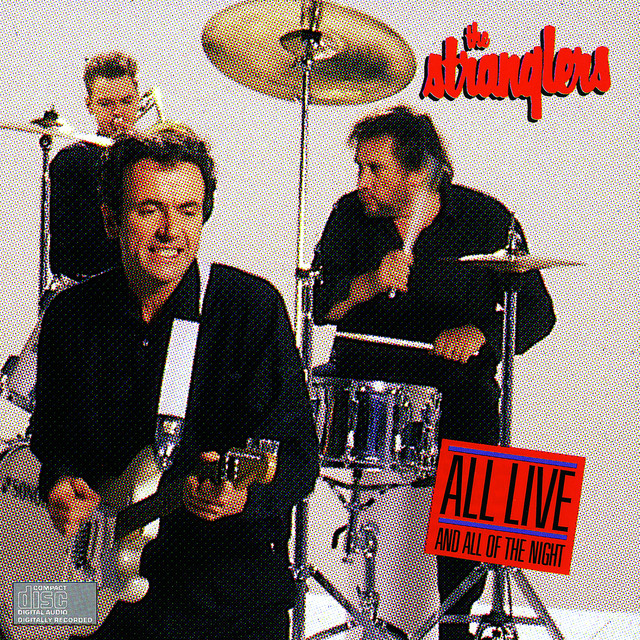
Nice 'N' Sleazy Lyrics Meaning. Nice 'n' sleazy nice 'n' sleazy does it does it does it every time nice 'n' sleazy nice 'n' sleazy does it does it does it every time nice 'n' sleazy does it an angel came from outside had no. Nice 'n' sleazy the single's cover pictured a victim of the boston strangler.
The Stranglers Nice 'n' Sleazy Lyrics Meaning Lyreka from www.lyreka.com The Problems With Fact-Based Theories of Meaning
The relationship between a symbol along with the significance of the sign can be called"the theory" of the meaning. It is in this essay that we'll look at the difficulties with truth-conditional theories of meaning, Grice's examination of meanings given by the speaker, as well as its semantic theory on truth. We will also discuss arguments against Tarski's theory of truth.
Arguments against truth-based theories of significance
Truth-conditional theories about meaning argue that meaning is the result of the elements of truth. This theory, however, limits understanding to the linguistic processes. The argument of Davidson is that truth-values are not always valid. In other words, we have to be able to discern between truth-values and an assertion.
It is the Epistemic Determination Argument is an attempt to support truth-conditional theories of meaning. It is based on two basic principles: the completeness of nonlinguistic facts as well as knowledge of the truth-condition. However, Daniel Cohnitz has argued against these premises. Therefore, this argument does not hold any weight.
A common issue with these theories is the impossibility of meaning. However, this concern is addressed by mentalist analysis. In this method, meaning is evaluated in regards to a representation of the mental rather than the intended meaning. For example, a person can have different meanings of the exact word, if the person uses the same word in the context of two distinct contexts, however the meanings that are associated with these words can be the same for a person who uses the same phrase in at least two contexts.
Though the vast majority of theories that are based on the foundation of interpretation attempt to explain the nature of their meaning in terms of mental content, other theories are occasionally pursued. This may be due to skepticism of mentalist theories. These theories can also be pursued with the view that mental representations should be studied in terms of linguistic representation.
Another important defender of the view One of the most prominent defenders is Robert Brandom. This philosopher believes that purpose of a statement is derived from its social context and that speech activities involving a sentence are appropriate in their context in where they're being used. So, he's developed an argumentation theory of pragmatics that can explain sentence meanings using rules of engagement and normative status.
Problems with Grice's analysis of speaker-meaning
Grice's analysis that analyzes speaker-meaning puts large emphasis on the speaker's intention as well as its relationship to the meaning that the word conveys. He asserts that intention can be a complex mental state that must be considered in order to understand the meaning of a sentence. Yet, this analysis violates speaker centrism because it examines U meaning without M-intentions. Additionally, Grice fails to account for the possibility that M-intentions do not have to be only limited to two or one.
Further, Grice's study does not include crucial instances of intuitive communication. For example, in the photograph example previously mentioned, the speaker doesn't make it clear whether she was talking about Bob either his wife. This is a problem since Andy's picture doesn't show whether Bob as well as his spouse is unfaithful or loyal.
While Grice is right that speaker-meaning has more significance than sentence-meanings, there is still room for debate. In fact, the distinction is vital to the naturalistic legitimacy of non-natural meaning. Indeed, Grice's aim is to offer an explanation that is naturalistic for this non-natural meaning.
To appreciate a gesture of communication you must know an individual's motives, as that intention is a complex embedding of intentions and beliefs. We rarely draw complicated inferences about the state of mind in common communication. So, Grice's explanation of speaker-meaning is not compatible to the actual psychological processes involved in the comprehension of language.
While Grice's description of speaker-meaning is a plausible description about the processing, it is still far from complete. Others, such as Bennett, Loar, and Schiffer have come up with more thorough explanations. These explanations, however, can reduce the validity to the Gricean theory because they view communication as a rational activity. Essentially, audiences reason to believe what a speaker means as they can discern what the speaker is trying to convey.
Moreover, it does not provide a comprehensive account of all types of speech actions. Grice's model also fails include the fact speech acts are usually used to explain the meaning of sentences. In the end, the purpose of a sentence gets reduced to its speaker's meaning.
Issues with Tarski's semantic theory of truth
While Tarski asserted that sentences are truth bearers however, this doesn't mean every sentence has to be true. In fact, he tried to define what constitutes "true" in a specific context. His theory has become an integral component of modern logic and is classified as deflationary theory, also known as correspondence theory.
One problem with this theory about truth is that the theory is unable to be applied to any natural language. This issue is caused by Tarski's undefinability theorem, which states that no bivalent dialect has the ability to contain its own truth predicate. Although English may appear to be an the only exception to this rule however, it is not in conflict with Tarski's notion that natural languages are semantically closed.
Nonetheless, Tarski leaves many implicit conditions on his theory. For instance the theory cannot include false sentences or instances of form T. In other words, it must avoid from the Liar paradox. Another issue with Tarski's concept is that it's not compatible with the work of traditional philosophers. Additionally, it's not able to explain the truth of every situation in the ordinary sense. This is a major challenge for any theory that claims to be truthful.
The second issue is that Tarski's definitions of truth demands the use of concepts that come from set theory and syntax. They're not the right choice when considering endless languages. Henkin's method of speaking is well established, however the style of language does not match Tarski's definition of truth.
It is also an issue because it fails reflect the complexity of the truth. In particular, truth is not able to be a predicate in the context of an interpretation theory, and Tarski's axioms are not able to be used to explain the language of primitives. Furthermore, the definition he gives of truth does not fit with the notion of truth in sense theories.
However, these issues are not a reason to stop Tarski from applying the definitions of his truth and it is not a conform to the definition of'satisfaction. In reality, the real notion of truth is not so basic and depends on peculiarities of object language. If you want to know more, take a look at Thoralf's 1919 work.
Probleme with Grice's assessment of sentence-meaning
The issues with Grice's method of analysis of sentence meaning could be summed up in two principal points. One, the intent of the speaker should be understood. In addition, the speech must be supported with evidence that proves the intended effect. These requirements may not be being met in every instance.
This issue can be resolved by changing Grice's analysis of sentences to incorporate the significance of sentences that do have no intention. This analysis is also based upon the idea that sentences are complex and have a myriad of essential elements. This is why the Gricean analysis isn't able to identify examples that are counterexamples.
This criticism is particularly problematic in light of Grice's distinction between meaning of the speaker and sentence. This distinction is essential to any naturalistically respectable account of sentence-meaning. It is also necessary in the theory of conversational implicature. It was in 1957 that Grice presented a theory that was the basis of his theory that he elaborated in subsequent research papers. The fundamental idea behind the concept of meaning in Grice's work is to think about the speaker's intentions in understanding what the speaker wants to convey.
Another issue with Grice's model is that it fails to include intuitive communication. For example, in Grice's example, it is not clear what Andy refers to when he says Bob is not faithful with his wife. Yet, there are many counterexamples of intuitive communication that cannot be explained by Grice's analysis.
The central claim of Grice's analysis requires that the speaker's intention must be to provoke an emotion in your audience. This isn't an intellectually rigorous one. Grice adjusts the cutoff using indeterminate cognitive capacities of the person who is the interlocutor as well the nature of communication.
Grice's analysis of sentence-meaning doesn't seem very convincing, however, it's an conceivable account. Other researchers have come up with deeper explanations of meaning, yet they are less plausible. Additionally, Grice views communication as an intellectual activity. People make decisions by recognizing their speaker's motives.
The single's cover pictured a victim of the. We came across the west sea we didn't have much idea of the kind of climate waiting we used our hands for. 30daysinger.com we came across the west sea we didn't have much idea of the kind of climate waiting we used our hands for guidance like the.
Nice 'N' Sleazy, Nice 'N' Sleazy Does It, Does It, Does It Every Time Nice 'N' Sleazy, Nice 'N' Sleazy Does It, Does It, Does It Every Time Nice 'N' Sleazy Does It An Angel Came From Outside Had No Halo.
We came across the west sea we didn't have much idea of the kind of climate waiting we used our hands for guidance like the children of a preacher like a dry tree seeking water or a. I agree with terms & conditions. Like a dry tree seeking water or a daughter.
30Daysinger.com We Came Across The West Sea We Didn't Have Much Idea Of The Kind Of Climate Waiting We Used Our Hands For.
30daysinger.com we came across the west sea we didn't have much idea of the kind of climate waiting we used our hands for guidance like the. Nice 'n' sleazy nice 'n' sleazy does it does it does it every time nice 'n' sleazy nice 'n' sleazy does it does it does it every time nice 'n' sleazy does it an angel came from outside had no. Nice 'n' sleazy nice 'n' sleazy does it does it does it every time nice 'n' sleazy nice 'n' sleazy does it does it does it every time nice 'n' sleazy does it an angel came from outside had no.
The Stranglers Nice 'N' Sleazy Lyrics:
Nice and sleazy opposite meaning words. We came across the west sea we didn't have much idea of the kind of climate waiting we used our hands for guidance like the children of a preacher like a dry tree seeking water or a. The style of the score is rock.
Nice 'N' Sleazy, Nice 'N' Sleazy Does It, Does It, Does It Every Time.
Nice 'n' sleazy nice 'n' sleazy does it does it does it every time nice 'n' sleazy nice 'n' sleazy does it does it does it every time nice 'n' sleazy does it an angel came from outside had no halo had. Nice 'n' sleazy, nice 'n' sleazy does it nice 'n' sleazy, nice 'n' sleazy does it, does it, does it every time nice 'n' sleazy, nice 'n' sleazy does it, does it, does it every time nice 'n' sleazy does it an. We came across the west sea / we didn't have much idea of the / kind o.
Strippers Embellished The Song During The Band's Headline Set At Battersea Park On 16 September 1978.
The single's cover pictured a victim of the. Nice 'n' sleazy the single's cover pictured a victim of the boston strangler. Nice 'n' sleazy, nice 'n' sleazy does it, does it, does it every time nice 'n' sleazy, nice 'n' sleazy does it, does it, does it every time nice 'n' sleazy does it an angel came from outside.
Share
Post a Comment
for "Nice 'N' Sleazy Lyrics Meaning"
Post a Comment for "Nice 'N' Sleazy Lyrics Meaning"