Ding Dong Song Meaning. The sound of a bell ringing. The lyrics of the song ding dong are given above in english language.other interesting.
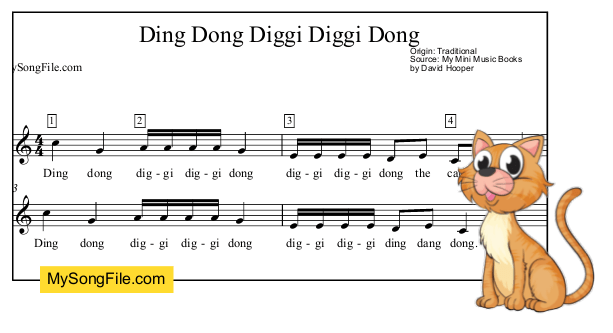
Ding Dong Diggi Diggi Dong My Song File from mysongfile.com The Problems With The Truthfulness-Conditional Theory of Meaning
The relation between a sign to its intended meaning can be known as"the theory" of the meaning. Within this post, we'll review the problems with truth-conditional theories of meaning. We will also discuss Grice's analysis of the meaning of a speaker, and his semantic theory of truth. We will also analyze opposition to Tarski's theory truth.
Arguments against truth-based theories of significance
Truth-conditional theories for meaning say that meaning is a function of the truth-conditions. This theory, however, limits the meaning of linguistic phenomena to. In Davidson's argument, he argues that truth-values are not always real. We must therefore be able to discern between truth-values and an statement.
The Epistemic Determination Argument is a method to support truth-conditional theories of meaning. It relies on two essential assumption: the omniscience of non-linguistic facts and the knowledge of the truth-condition. However, Daniel Cohnitz has argued against these premises. Thus, the argument has no merit.
Another concern that people have with these theories is their implausibility of meaning. But, this issue is tackled by a mentalist study. This is where meaning is examined in relation to mental representation rather than the intended meaning. For example the same person may get different meanings from the words when the person uses the exact word in the context of two distinct contexts, however, the meanings and meanings of those words may be identical as long as the person uses the same phrase in 2 different situations.
Though the vast majority of theories that are based on the foundation of meaning try to explain what is meant in mind-based content non-mentalist theories are often pursued. This is likely due to doubts about mentalist concepts. It is also possible that they are pursued for those who hold mental representations should be studied in terms of the representation of language.
Another prominent defender of this viewpoint Another major defender of this view is Robert Brandom. This philosopher believes that the significance of a phrase is dependent on its social setting as well as that speech actions which involve sentences are appropriate in the context in which they are used. This is why he has devised the concept of pragmatics to explain sentence meanings using socio-cultural norms and normative positions.
Problems with Grice's analysis of speaker-meaning
Grice's analysis based on speaker-meaning puts particular emphasis on utterer's intention and the relationship to the significance for the sentence. He asserts that intention can be something that is a complicated mental state that must be considered in order to discern the meaning of sentences. This analysis, however, violates speaker centrism by looking at U-meaning without considering M-intentions. Additionally, Grice fails to account for the possibility that M-intentions aren't restricted to just one or two.
Further, Grice's study isn't able to take into account crucial instances of intuitive communication. For example, in the photograph example that we discussed earlier, the speaker cannot be clear on whether she was talking about Bob or his wife. This is because Andy's photograph doesn't indicate whether Bob or his wife is not faithful.
While Grice is correct that speaker-meaning is more crucial than sentence-meaning, there's some debate to be had. In fact, the distinction is crucial for the naturalistic integrity of nonnatural meaning. Indeed, Grice's purpose is to give naturalistic explanations of this non-natural meaning.
To comprehend a communication, we must understand the speaker's intention, and the intention is complex in its embedding of intentions and beliefs. But, we seldom draw deep inferences about mental state in common communication. In the end, Grice's assessment of meaning of the speaker is not compatible to the actual psychological processes involved in comprehending language.
Although Grice's explanation of speaker-meaning is a plausible explanation that describes the hearing process it is still far from comprehensive. Others, including Bennett, Loar, and Schiffer, have developed deeper explanations. However, these explanations make it difficult to believe the validity of Gricean theory because they treat communication as a rational activity. Essentially, audiences reason to be convinced that the speaker's message is true because they know the speaker's motives.
It also fails to consider all forms of speech actions. Grice's theory also fails to acknowledge the fact that speech acts can be employed to explain the meaning of sentences. This means that the meaning of a sentence is reduced to the meaning of the speaker.
Problems with Tarski's semantic theory of truth
Although Tarski suggested that sentences are truth bearers it doesn't mean the sentence has to always be accurate. In fact, he tried to define what is "true" in a specific context. His theory has since become an integral part of modern logic, and is classified as deflationary theory or correspondence theory.
One issue with the doctrine of the truthful is that it is unable to be applied to a natural language. The reason for this is Tarski's undefinability thesis, which asserts that no bivalent languages is able to hold its own predicate. While English could be seen as an an exception to this rule and this may be the case, it does not contradict with Tarski's notion that natural languages are closed semantically.
Nonetheless, Tarski leaves many implicit restrictions on his theories. For example the theory cannot contain false statements or instances of form T. This means that theories should avoid being a victim of the Liar paradox. Another issue with Tarski's idea is that it is not conforming to the ideas of traditional philosophers. In addition, it's impossible to explain all truthful situations in terms of the common sense. This is the biggest problem for any theory of truth.
The second issue is that Tarski's definition for truth calls for the use of concepts taken from syntax and set theory. These are not appropriate when considering infinite languages. Henkin's language style is valid, but this does not align with Tarski's definition of truth.
His definition of Truth is insufficient because it fails to take into account the complexity of the truth. For instance, truth can't serve as predicate in an understanding theory, and Tarski's principles cannot define the meaning of primitives. In addition, his definition of truth does not align with the concept of truth in the theories of meaning.
However, these problems do not preclude Tarski from applying their definition of truth and it doesn't conform to the definition of'satisfaction. The actual definition of truth is not as straight-forward and is determined by the peculiarities of object language. If you're interested in learning more, take a look at Thoralf Skolem's 1919 article.
Probleme with Grice's assessment of sentence-meaning
The issues with Grice's analysis on sentence meaning can be summarized in two key points. First, the intentions of the speaker must be understood. Additionally, the speaker's speech is to be supported by evidence demonstrating the desired effect. But these requirements aren't achieved in every case.
The problem can be addressed by changing Grice's understanding of meaning of sentences, to encompass the significance of sentences that lack intentionality. This analysis is also based on the premise of sentences being complex and comprise a number of basic elements. So, the Gricean approach isn't able capture examples that are counterexamples.
This argument is especially problematic with regard to Grice's distinctions between meaning of the speaker and sentence. This distinction is the foundational element of any naturalistically respectable account of the meaning of a sentence. This theory is also crucial for the concept of conversational implicature. On the 27th of May, 1957 Grice offered a fundamental theory on meaning that was elaborated in subsequent works. The basic notion of the concept of meaning in Grice's work is to consider the speaker's intention in determining what message the speaker is trying to communicate.
Another problem with Grice's analysis is that it does not examine the impact of intuitive communication. For example, in Grice's example, it's not clear what Andy really means when he asserts that Bob is not faithful toward his wife. Yet, there are many variations of intuitive communication which are not explained by Grice's theory.
The main premise of Grice's analysis requires that the speaker is required to intend to cause an effect in people. However, this argument isn't strictly based on philosophical principles. Grice defines the cutoff according to potential cognitive capacities of the interlocutor and the nature of communication.
Grice's interpretation of sentence meaning is not very plausible though it's a plausible analysis. Others have provided better explanations for meaning, but they seem less plausible. In addition, Grice views communication as an act of reasoning. Audiences reason to their beliefs because they are aware of the message of the speaker.
Ding dong suck meaning and definition. A stupid or foolish person; Ding dong dang, i didn't level! or.
This Is A Beutifull Song.
The sound of a bell ringing. An imitation of a doorbell ring. You can watch this song full video on youtube and read the lyrics.
Used To Represent The Sound A Bell Makes 2.
E’en so here below, below let steeple. Hey dil ding dong ding dole. A noisy argument or fight:
Ding Dong Ditch Is Believed To Have Been Started By English Schoolchildren In The 19Th Century As A Form Of Entertainment.ding Dong Is For The Sound Of The Doorbell And Ditch,.
“the bell goes ding dong.” ding dong in songs: A hilarious song which is 20% porn,75% moustache, and 5% music. Here you find 1 meanings of ding dong song.
Sola Baras Ko Main Ne Sambhala.
Its origin dates back to the 16th century england. The lyrics have a hidden meaning, if you listen closely. My cat died and i quickly poured myself some gin did she die from old age or was it for my sins god i loved her oh so much miss her little kitty touch does she miss me does she care oh i.
Ding Dong Bell Song From The Album Nursery Rhymes Is Released On Jun 2010.
Ding dong suck meaning and definition. General commentwhen i read the lyrics now, i. (horol) an attachment to a clock by which the quarter hours are struck upon bells of different.

Post a Comment for "Ding Dong Song Meaning"