Eli Coming Song Meaning. Excellent performance in syracuse, september 1970 Eli young band song meanings and interpretations with user discussion.
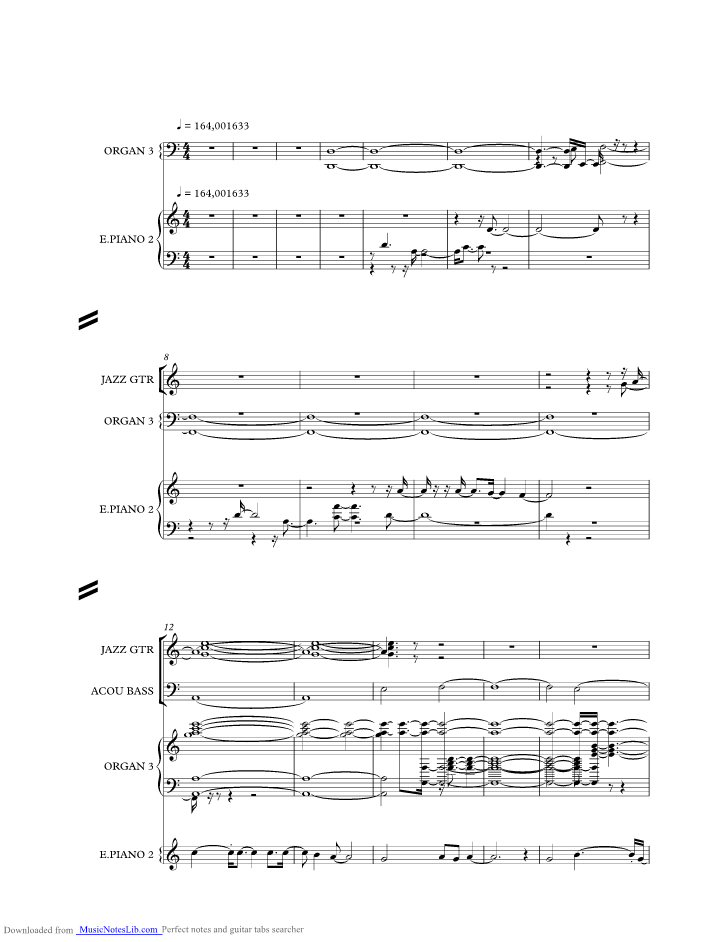
Elis Coming music sheet and notes by 3 Dog Night from musicnoteslib.com The Problems With True-Conditional theories about Meaning
The relationship between a symbol as well as its significance is known as"the theory that explains meaning.. For this piece, we'll discuss the challenges of truth-conditional theories of meaning, Grice's examination of meanings given by the speaker, as well as Sarski's theory of semantic truth. We will also examine argument against Tarski's notion of truth.
Arguments against truth-based theories of meaning
Truth-conditional theories for meaning say that meaning is a function of the conditions of truth. However, this theory limits the meaning of linguistic phenomena to. It is Davidson's main argument that truth-values aren't always true. In other words, we have to recognize the difference between truth-values and an claim.
The Epistemic Determination Argument attempts to argue for truth-conditional theories on meaning. It is based on two basic assumption: the omniscience of non-linguistic facts as well as understanding of the truth condition. However, Daniel Cohnitz has argued against these assumptions. Thus, the argument is not valid.
Another common concern with these theories is the lack of a sense of the concept of. This issue can be addressed by a mentalist analysis. In this way, the meaning is analysed in ways of an image of the mind instead of the meaning intended. For example the same person may be able to have different meanings for the same word if the same individual uses the same word in 2 different situations, however, the meanings for those words can be the same even if the person is using the same word in both contexts.
Although the majority of theories of meaning try to explain the meaning in ways that are based on mental contents, other theories are sometimes pursued. This is likely due to being skeptical of theories of mentalists. They can also be pushed with the view mental representation needs to be examined in terms of the representation of language.
Another important defender of this viewpoint The most important defender is Robert Brandom. He believes that the significance of a sentence determined by its social surroundings and that speech actions that involve a sentence are appropriate in what context in the setting in which they're used. So, he's come up with a pragmatics theory that explains sentence meanings based on socio-cultural norms and normative positions.
Grice's analysis of speaker-meaning
The analysis of speaker-meaning by Grice places much emphasis on the utterer's intentions and their relation to the meaning of the phrase. Grice believes that intention is a mental state with multiple dimensions that must be understood in order to determine the meaning of an utterance. However, this theory violates speaker centrism by studying U-meaning without considering M-intentions. Additionally, Grice fails to account for the issue that M intentions are not limited to one or two.
Additionally, Grice's analysis fails to account for some important cases of intuitive communication. For example, in the photograph example that was mentioned earlier, the subject isn't clear as to whether he was referring to Bob as well as his spouse. This is due to the fact that Andy's photograph does not show the fact that Bob or his wife is unfaithful or faithful.
Although Grice is correct that speaker-meaning is more crucial than sentence-meanings, there is still room for debate. In fact, the distinction is vital to the naturalistic integrity of nonnatural meaning. Indeed, Grice's aim is to give naturalistic explanations that explain such a non-natural meaning.
To fully comprehend a verbal act we must be aware of an individual's motives, as that intention is a complex embedding of intentions and beliefs. However, we seldom make deep inferences about mental state in typical exchanges. Thus, Grice's theory of speaker-meaning does not align to the actual psychological processes that are involved in language understanding.
While Grice's model of speaker-meaning is a plausible description of this process it's insufficient. Others, like Bennett, Loar, and Schiffer, have come up with more precise explanations. However, these explanations tend to diminish the credibility that is the Gricean theory, since they see communication as an act that can be rationalized. The reason audiences believe what a speaker means as they can discern the speaker's motives.
Additionally, it does not take into account all kinds of speech actions. Grice's theory also fails to be aware of the fact speech acts are usually used to explain the meaning of a sentence. This means that the significance of a sentence is reduced to the speaker's interpretation.
Problems with Tarski's semantic theories of truth
While Tarski declared that sentences are truth-bearing, this doesn't mean that every sentence has to be true. Instead, he attempted define what is "true" in a specific context. His theory has become an integral part of contemporary logic and is classified as a deflationary theory or correspondence theory.
One issue with the doctrine for truth is it cannot be applied to any natural language. This issue is caused by Tarski's undefinability theorem. It affirms that no bilingual language can contain its own truth predicate. Even though English may appear to be an one of the exceptions to this rule however, it is not in conflict with Tarski's belief that natural languages are semantically closed.
But, Tarski leaves many implicit restrictions on his theories. For example it is not allowed for a theory to include false sentences or instances of form T. That is, the theory must be free of that Liar paradox. Another drawback with Tarski's theory is that it isn't conforming to the ideas of traditional philosophers. Furthermore, it cannot explain all cases of truth in ways that are common sense. This is the biggest problem for any theory on truth.
Another problem is that Tarski's definition is based on notions drawn from set theory as well as syntax. They're not appropriate when considering endless languages. Henkin's style for language is well-founded, however it doesn't match Tarski's notion of truth.
This definition by the philosopher Tarski challenging because it fails to make sense of the complexity of the truth. Truth for instance cannot be predicate in language theory, and Tarski's axioms do not provide a rational explanation for the meaning of primitives. Furthermore, his definition of truth is not consistent with the notion of truth in terms of meaning theories.
However, these concerns cannot stop Tarski applying an understanding of truth that he has developed, and it does not fall into the'satisfaction' definition. In fact, the exact definition of truth is less than simple and is dependent on the peculiarities of object language. If you want to know more, refer to Thoralf Skolem's 1919 essay.
Probleme with Grice's assessment of sentence-meaning
Grice's problems with his analysis of sentence meaning can be summarized in two principal points. First, the intentions of the speaker should be recognized. Also, the speaker's declaration must be supported by evidence that shows the intended effect. However, these criteria aren't in all cases. in every instance.
This issue can be addressed through a change in Grice's approach to sentence-meaning in order to account for the meaning of sentences that don't have intention. The analysis is based on the principle which sentences are complex entities that contain a variety of fundamental elements. As such, the Gricean analysis isn't able to identify oppositional examples.
This particular criticism is problematic when we look at Grice's distinctions among meaning of the speaker and sentence. This distinction is essential to any naturalistically sound account of sentence-meaning. This theory is also vital in the theory of conversational implicature. It was in 1957 that Grice established a base theory of significance that expanded upon in subsequent works. The fundamental concept of significance in Grice's study is to think about the speaker's intention in understanding what the speaker is trying to communicate.
Another issue with Grice's model is that it doesn't account for intuitive communication. For instance, in Grice's example, it's not entirely clear what Andy uses to say that Bob is unfaithful to his wife. But, there are numerous examples of intuition-based communication that are not explained by Grice's study.
The basic premise of Grice's theory is that the speaker should intend to create an emotion in audiences. However, this argument isn't philosophically rigorous. Grice decides on the cutoff according to cognitional capacities that are contingent on the contactor and also the nature communication.
The sentence-meaning explanation proposed by Grice cannot be considered to be credible, but it's a plausible interpretation. Other researchers have devised deeper explanations of significance, but these are less plausible. In addition, Grice views communication as an intellectual activity. The audience is able to reason by being aware of the speaker's intent.
About press copyright contact us creators advertise developers terms privacy policy & safety how youtube works test new features press copyright contact us creators. ℗ 1967 umg recordings, inc.relea. Interested in the deeper meanings of eli young band songs?
Eli's Coming Lyrics By Three Dog Night From The Celebrate:
My interpretationi believe this is what went through the mind of eve after she had eaten from the tree of the knowledge of good and evil and then heard god walking through the garden of eden. Listen to three dog night eli's coming mp3 song. I'm down on my knees.
Interested In The Deeper Meanings Of Eli Young Band Songs?
Find more of laura nyro lyrics. And he comin' to get me mama. Cry but he's never gonna follow.
Girl, Eli's Coming, You Better Hide Girl, Eli's Coming, You Better Hide Girl, Eli's Coming, Hide Your Heart, Girl, Hide It You Better, Better Hide Your Heart Eli's Coming, Better Walk, Walk But You'll.
About press copyright contact us creators advertise developers terms privacy policy & safety how youtube works test new features press copyright contact us creators. ℗ 1967 umg recordings, inc.relea. Excellent performance in syracuse, september 1970
The Name Eli Means Several Things, Including My God, Ascent, Elevation, Defender Of Mankind, And Exalted (1).
1)a phrase signifiying a portend of something evil. I cried at the corners of the square. Original lyrics of eli's coming song by laura nyro.
Eli's Comin' Hide It Girl Eli's A Comin' Better Hide Girl Eli's A Comin' Better Hide Your Heart Your Heart Eli's Comin' Hide Your Heart You Better Better Hide Your Heart Eli's Comin' Better Walk Cry But He's.
Cry but he's never gonna follow. It could also mean “my god” when it’s a derivation of other biblical names such as elijah, eliezer, and elisha. Watch official video, print or download text in pdf.

Post a Comment for "Eli Coming Song Meaning"